

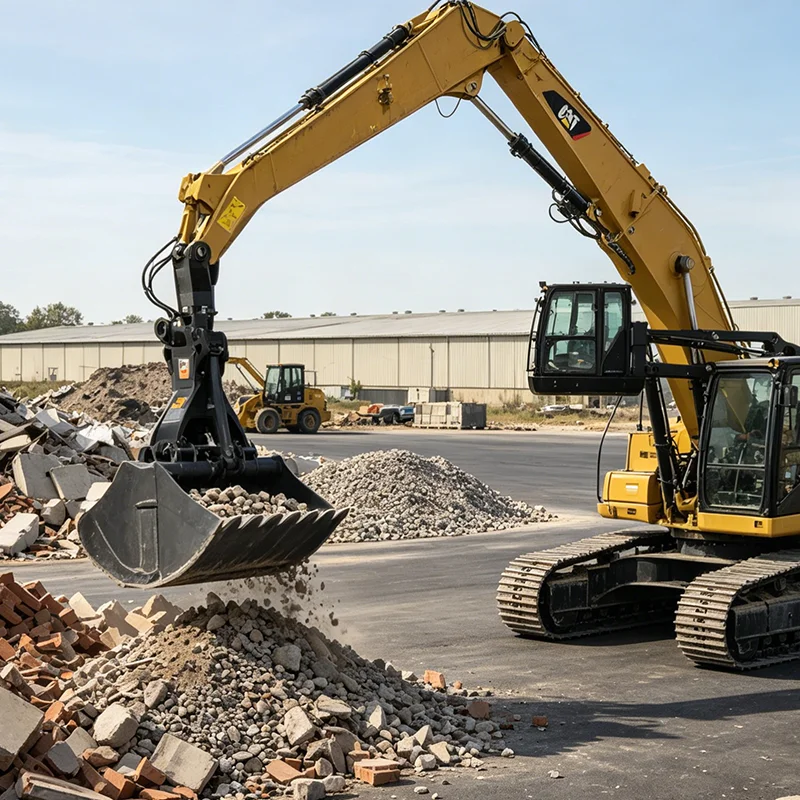
Clamshell Bucket: Vertical Digging for Deep Foundations and Trenches
A clamshell bucket (or clamshell grab) is designed for vertical excavation — digging deep, narrow holes and trenches where a standard bucket cannot reach. The two curved shells open and close like a clamshell, cutting into the soil and trapping it inside the bucket for lifting and dumping.
Clamshell buckets are essential for deep foundation work — digging piers, elevator shafts, and basement excavations where depth exceeds 5 meters. They are also used for dredging, slurry wall construction, and material handling in tight spaces where swing room is limited.
Shell Type: Digging vs Material Handling
Digging clamshells have sharp, reinforced cutting edges and are built for cutting through compacted soil and clay. Material handling clamshells (also called grapple buckets) have smoother shells and wider openings, designed for grabbing loose material like sand, gravel, and scrap rather than cutting through hard ground.
The shell opening width determines how much material the bucket can hold per cycle. A 0.5 m³ clamshell on a 20-ton excavator typically digs 0.3–0.4 m³ per pass in dense soil, and up to 0.5 m³ in loose material.
Cylinder Force and Closing Speed
The closing cylinder generates the force that cuts into the soil and holds the material inside. Larger cylinders deliver higher closing force but slower cycle times. For foundation digging, slow and powerful is better — a powerful close prevents the bucket from bouncing off compacted soil. For material handling, faster cycle times matter more than raw force.
Maintenance: Shell Teeth and Pivot Pins
The cutting edges on digging clamshells are replaceable — inspect them weekly for wear, and flip or replace them when the edge becomes rounded. The pivot pins at the shell hinges need greasing every 10 hours of operation. Check the cylinder rods for scoring or pitting, as surface damage accelerates seal failure.