

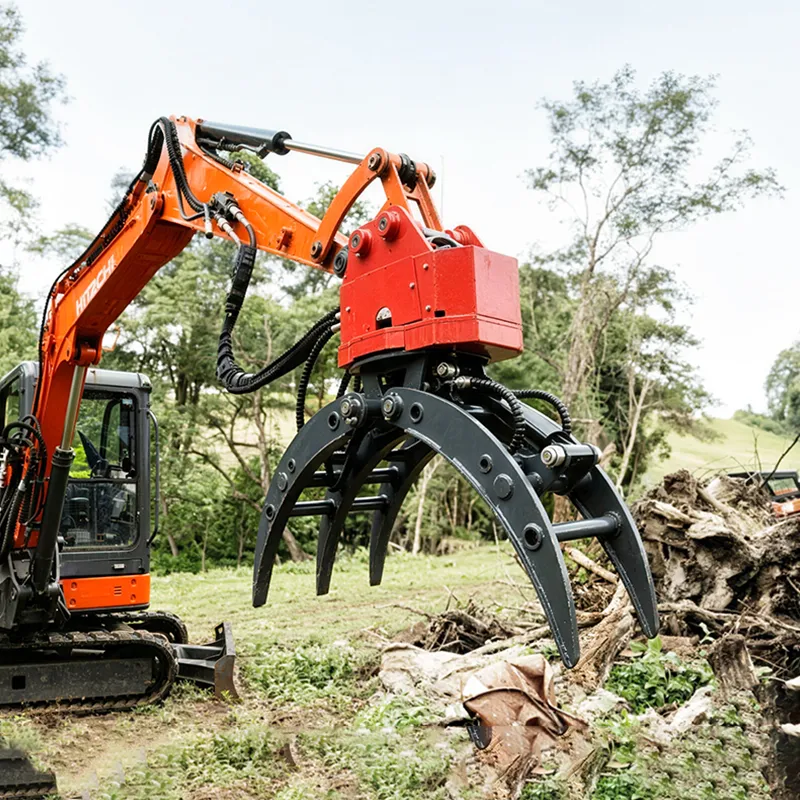
Rotating vs Non-Rotating Grapple: When Rotation Matters
A log grapple (rotating grapple) lets the operator rotate the load 360 degrees from the cab, which is essential for aligning logs on a truck, placing them precisely in a pile, or sorting them by size. A non-rotating grapple only opens and closes — you must reposition the entire excavator to change the log angle.
Rotation is powered by a hydraulic rotary motor built into the grapple base, typically delivering 500–1500 N·m of torque. Most operators prefer continuous 360-degree rotation rather than limited-angle rotation, because it allows fine positioning without stopping at mechanical limits.
Tine Configuration: Two-Tine vs Four-Tine
Two-tine grapples are standard for log and timber handling — the two curved tines wrap around the log, holding it securely for lifting and swinging. Four-tine (or multi-tine) grapples are used for scrap, demolition debris, and irregular material where you need multiple contact points to prevent the load from shifting.
For log handling, the tine length and curve angle matter. Longer tines (800–1200 mm) handle larger diameter logs and provide a deeper grip. Shorter tines (500–700 mm) work better for smaller logs and tight spaces.
Clamping Force and Load Capacity
Grapple clamping force ranges from 2 to 8 tons depending on grapple size and excavator weight class. A 10-ton excavator grapple typically delivers 3–4 tons of clamping force, enough to hold logs up to 600 mm diameter securely. The working load limit (WLL) is usually 1–2 tons for a mid-size grapple — check the rating plate, as exceeding it can bend the tines.
Maintenance: Pins, Bushings and Rotator Seals
Grease the grapple pivot pins and bushings every 10–20 hours of operation. The rotary motor seals should be inspected monthly for leaks — a leaking rotator loses holding torque over time. Check the tine teeth (replaceable on most models) for wear, and inspect the hydraulic hoses for chafing where they enter the rotator housing.