

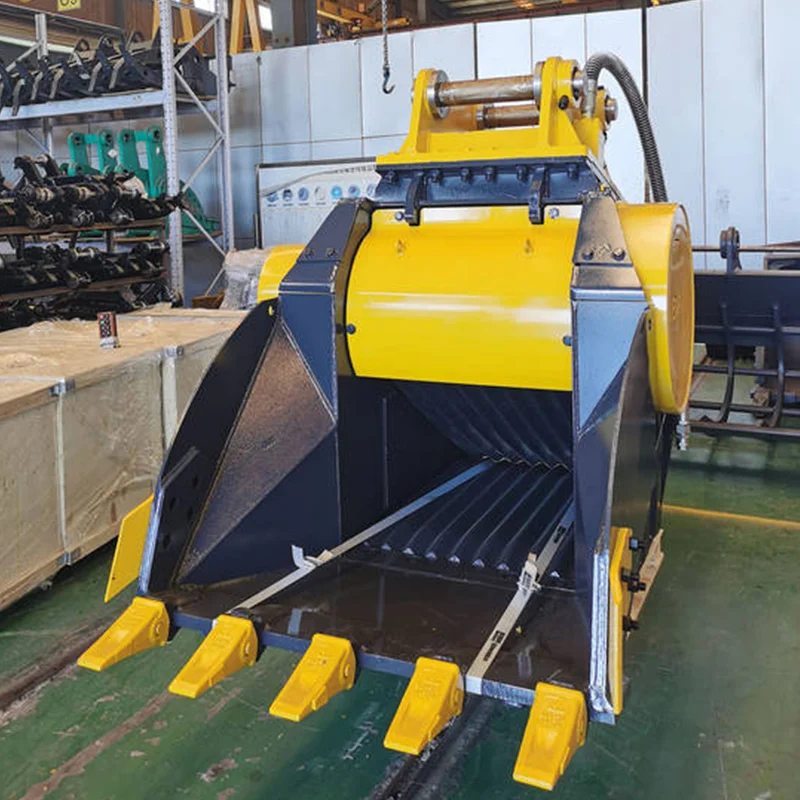
Jaw Setting Controls Output Size
The crusher bucket uses a single-toggle jaw crusher mechanism — a fixed jaw and a moving jaw that pivots on a shaft. The gap between the two jaws at the discharge end (closed side setting or CSS) determines the maximum size of crushed material that exits the bucket.
Typical CSS ranges from 10 mm to 100 mm. A 20-ton excavator crusher bucket set to 30 mm CSS produces roughly 15–25 m³ of crushed concrete per hour. Set to 50 mm, production rises to 30–40 m³/h, but the output is coarser. Most demolition contractors run at 30–40 mm for reusable aggregate.
Feed Size Limits: What Goes In vs What Jams
Crusher buckets have a maximum feed size — the largest chunk that can enter the jaw opening without jamming. As a rule, feed size should not exceed 70–80% of the jaw opening at the top. The most common jam is a piece of rebar wedged between the jaw plates. Always remove rebar from concrete before feeding it into the crusher bucket.
On-Site Recycling vs Hauling to a Crusher Plant
The crusher bucket pays for itself on demolition sites where you would otherwise haul concrete debris to a crushing plant. On a recent warehouse demolition project, a contractor used a 20-ton excavator with a crusher bucket to process 800 tons of concrete slab on site. The crushed aggregate was reused as road base, saving $30,000 in hauling and purchased aggregate costs.
Maintenance That Prevents Costly Downtime
Jaw plates wear — expect 200–500 hours of production before they need flipping or replacing. Flip the jaw plates when one side is worn — they are reversible, doubling the service life. Grease the jaw shaft bearings every 20 hours, and check the hydraulic hoses for chafing after rocky jobs.