

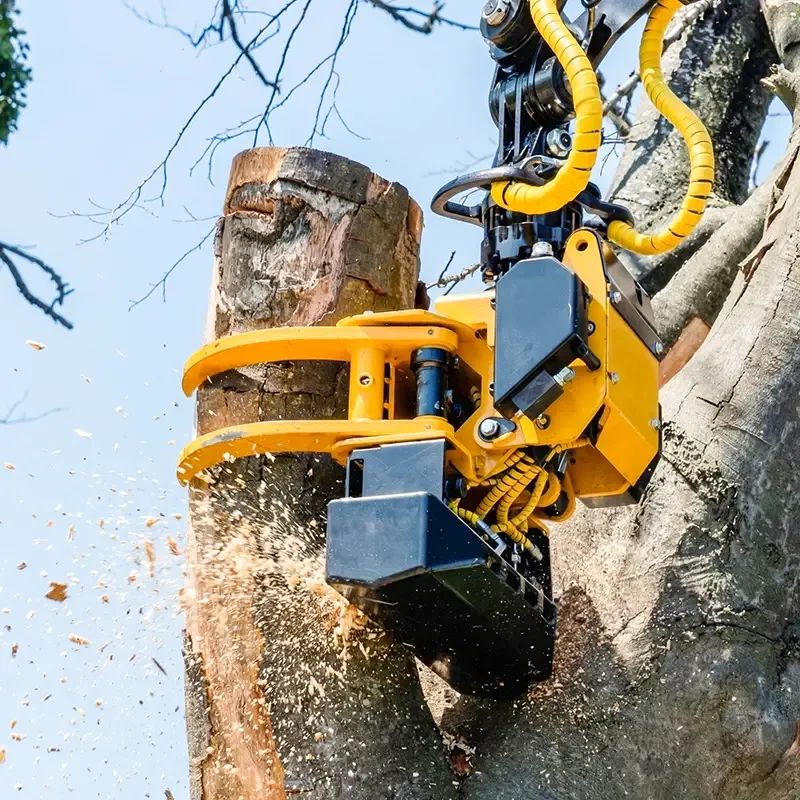
Grapple Saw vs Chainsaw: Why the Attachment Wins
A grapple saw combines a hydraulic chainsaw head with a rotating grapple on an excavator arm. It lets one operator grip, cut, and place trees without leaving the cab. Compared to a manual chainsaw, a grapple saw processes 10–20 times more trees per day, especially in steep or dangerous terrain where ground crews cannot safely work.
The saw bar length determines maximum tree diameter. Most grapple saws use 18–28 inch bars, cutting trees up to 500–700 mm diameter. The grapple clamping force (typically 2–5 tons) holds the tree securely while the saw cuts, preventing the trunk from pinching the bar.
Rotation and Tilt: Precision Placement
Most grapple saws have 360-degree continuous rotation, allowing the operator to position the cut tree exactly where needed — onto a truck, into a chipper, or along a roadside. Some models also have a 45-degree tilt function for cutting at angles on sloped ground.
Tree Processing Speed: Real Numbers
A grapple saw on a 10–15 ton excavator can process 80–150 trees per day in thinning operations, depending on tree size and terrain. In roadside tree removal, throughput drops to 30–60 trees per day. The key advantage over a ground crew: no one is working at height or under falling branches.
Maintenance: Saw Chain vs Grapple Pins
The most frequent maintenance item is the saw chain and bar — sharpen or replace every 2–4 hours of cutting. The grapple pins and bushings need greasing every 10–20 hours. Check the saw hydraulic hoses regularly for chafing against the grapple arms.