

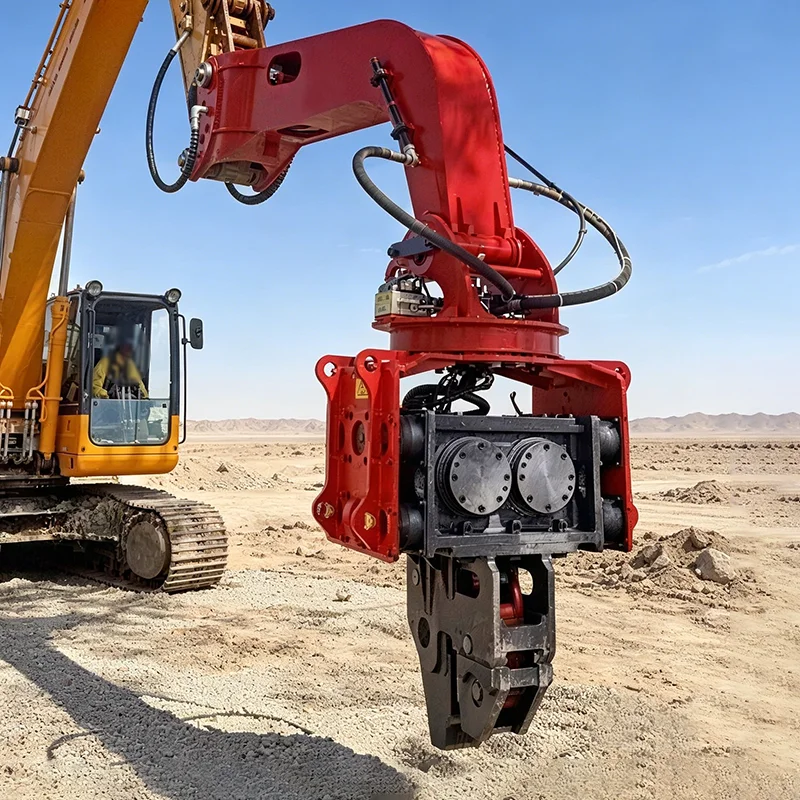
Hydraulic Pile Driver: Vibro Hammer Frequency, Pile Type and Excavator Matching
An excavator-mounted hydraulic pile driver (vibro hammer) drives and extracts steel sheet piles, H-beams, and precast concrete piles using high-frequency vertical vibration. Unlike a drop hammer or impact hammer, the vibro hammer shakes the pile at 2000–2400 vpm, temporarily liquefying the surrounding soil so the pile sinks under its own weight and the pile driver's weight. It works in noise-sensitive areas and urban job sites where impact driving is banned.
Vibro hammers are rated by eccentric moment and drive power. A 30 kW unit handles 6–12 m sheet piles on a 12–20 ton excavator. A 60 kW unit drives 15–20 m H-beams on a 25–40 ton excavator. Match the eccentric moment to pile length and soil density: longer piles in dense sand need higher eccentric moment, while short sheet piles in soft clay need lower moment to avoid pile breakage.
Which Piles Can a Vibro Hammer Drive?
Hydraulic pile drivers work best on steel sheet piles (Larssen type), H-beams, steel pipes, and precast concrete square piles. They are the standard tool for cofferdams, shoreline retaining walls, basement excavation support, and temporary shoring. They are less effective on solid concrete piles or very long piles (over 20 m) in dense gravel — in those cases, a diesel impact hammer is still the right choice.
On a riverbank project, a contractor used a 20-ton excavator with a 45 kW vibro hammer to drive 9 m Larssen sheet piles in soft alluvial soil. Production averaged 12–15 piles per day, roughly 3 times faster than a small impact hammer, with far less noise and vibration complaints from nearby residents.
Matching the Vibro Hammer to Your Excavator
Two specs matter: auxiliary hydraulic flow and carrying weight. Most 30–45 kW vibro hammers need 80–150 L/min at 20–25 MPa. Check your excavator's auxiliary circuit before buying — undersized flow slows vibration frequency and drops drive speed. The hammer itself weighs 800–2500 kg, so your excavator must have enough lifting capacity at full reach; operating weight should be 2–3 times the hammer weight plus the pile.
Maintenance That Prevents Breakdowns
The generator box inside the vibro hammer holds two eccentric weights sealed in oil. Check the oil level every 50 hours and change it every 500 hours — worn oil causes overheating and premature seal failure. Inspect the mounting pins and quick coupler bushings weekly; loose pins fatigue the bracket. Keep the hydraulic lines clean at connection points — dirt entering the generator box is the #1 cause of costly repairs.