

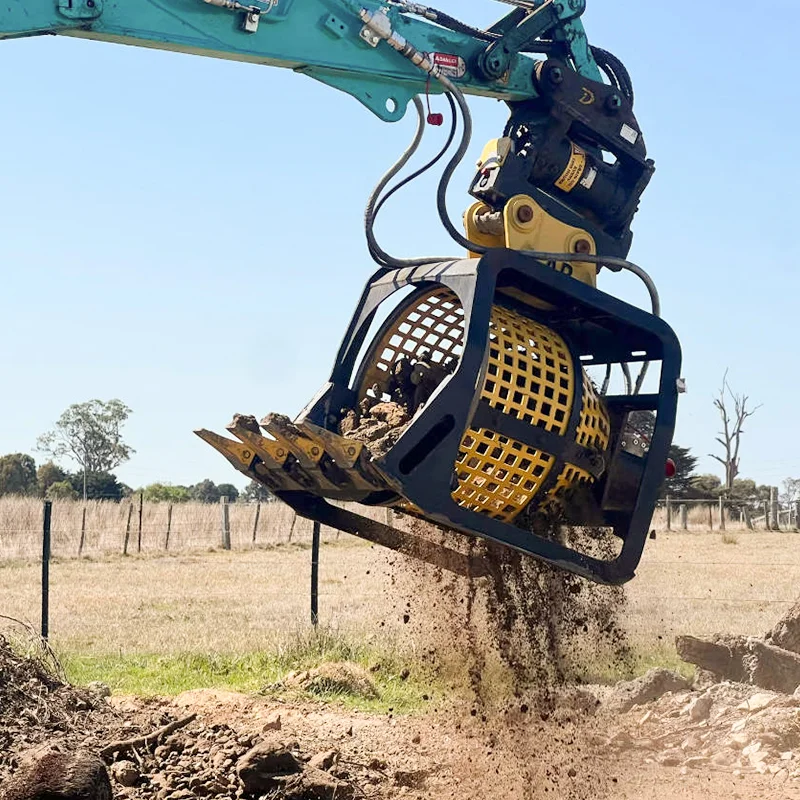
Rotary Screening Bucket: How It Separates Soil, Rock and Debris
A rotary screening bucket (also called a trommel screening bucket) mounts on the excavator arm and uses a rotating cylindrical screen drum to separate material by size. The operator fills the bucket, hydraulically rotates the drum, and smaller particles fall through the screen mesh while larger rocks, roots and debris stay inside — all on site, no separate screening plant needed.
The screen mesh size determines output grading. Common mesh sizes range from 10 mm to 100 mm. A 20 mm mesh produces soil-grade material ideal for landscaping and topsoil. A 50 mm mesh separates oversized rock from fill material. Most screening buckets use interchangeable mesh panels, so you can change grading by swapping panels rather than buying a whole new bucket.
Production Rates: What to Expect on Site
A rotary screening bucket on a 12–20 ton excavator processes 15–40 m³ per hour, depending on material moisture and mesh size. Dry sandy loam screens fastest — up to 40 m³/h. Wet clay clogs the mesh and drops production to 10–15 m³/h. For wet clay, choose a bucket with a self-cleaning drum or a separate paddle agitator inside the drum.
On a recent landscaping project, a contractor used a 16-ton excavator with a 1.2 m³ screening bucket to process 300 m³ of excavated soil on site. The screened topsoil was reused for grading, saving $8,000 in off-site disposal and purchased topsoil costs.
Choosing the Right Screening Bucket for Your Excavator
Screening buckets are matched to excavator weight class. A 6–10 ton excavator pairs with a 0.4–0.6 m³ screening bucket requiring 60–100 L/min hydraulic flow. A 15–25 ton excavator uses a 0.8–1.5 m³ bucket with 120–180 L/min flow. Always check the required flow and pressure against your auxiliary circuit — too little flow slows the drum rotation and drops production; too much flow overheats the hydraulic motor.
Maintenance That Prevents Downtime
The most common failure is a seized drum bearing caused by dust and debris entering the bearing seals. Grease the drum bearings every 10 hours of operation. Inspect the mesh panels weekly for tears or holes — a torn mesh lets oversized material through, defeating the whole purpose. Clean the drum after each job, especially when working with sticky clay.